Find out if your music will be turned down by YouTube, Spotify, TIDAL, Apple Music and more. Discover your music's Loudness Penalty score, for free.

Drag and drop an audio file here

Choose an audio file

MP3 or WAV

select a file

Your file will not be uploaded, stored or shared, meaning this process is secure and anonymous.

Online streaming services are turning down loud songs.

We all hate sudden changes in loudness - they're the #1 source of user complaints.

To avoid this and save us from being "blasted" unexpectedly, online streaming services measure loudness, and turn down music recorded at higher levels. We call this reduction the "Loudness Penalty" - the higher the level your music is mastered at, the bigger the penalty could be. But all the streaming services achieve this in different ways, and give different values, which makes it really hard to know how big the Loudness Penalty will be for your music...

Until now.

Simply select any WAV, MP3 or AAC file above, and within seconds we'll provide you with an accurate measurement of the Loudness Penalty for your music on many of the most popular music streaming services, and allow you to preview how it will sound for easy comparison with your favorite reference material.

Your file will not be uploaded, meaning this process is secure and anonymous.

Do you have any questions? Get in touch.

Processing audio

(but NOT uploading)

RESULTS (in dB)

0 YouTube
0 Spotify
0 TIDAL
0 Apple
0 Apple (Legacy)
0 Amazon
0 Pandora
0 Deezer

Want to take control of the Loudness Penalty for your music?

Find out how to optimize your music for impactful, punchy playback (and maximum encode quality) for all the online streaming services. Plus, receive a Loudness Penalty Report for your file that explains in detail what all the numbers mean.

Analyze another file

We just sent you an email with your report!

Analyze another file Visit MeterPlugs.com

By Click Downloader Activation Key Apr 2026

Let me go with the cautionary tale. The protagonist is a student, downloads the key legally first but can't afford it, so they find a crack, download malware, face a problem, resolve it by buying the real software.

Alex rushed to the university’s IT department. A technician, Ms. Carter, scanned the system and confirmed the infection. "Pirated keys often hide malware," she explained, restoring a recent backup that saved the core research but erased the newly downloaded data. The loss set Alex back weeks, forcing a collaboration with a colleague to reconstruct the missing dataset. By Click Downloader Activation Key

For days, Alex's laptop functioned seamlessly as they downloaded the dataset, buoyed by relief. But on the evening before the dataset's deadline extended by only 48 hours, their screen froze, displaying a cryptic message: “Decryption required. Pay 0.5 BTC to recover files.” A ransomware attack had encrypted their research, all saved in a single folder. Desperate, Alex tried booting into safe mode, but the malware had rooted itself deep. Let me go with the cautionary tale

Okay, time to put it all together into a coherent story. Start with Alex's problem, the discovery of Click Downloader, the activation key issue, the decision to pirate, the malware incident, the resolution, and the lesson learned. A technician, Ms

Let me outline a possible plot. Alex needs to download a lot of data for their university research. They find a tool called Click Downloader that's efficient but requires an activation key. The key is expensive, so they look for a free alternative. They download a key from a dubious website, which turns out to be a malware. Now their system is compromised, and they have to deal with the aftermath. Maybe they realize the importance of using legitimate software and learn a lesson.
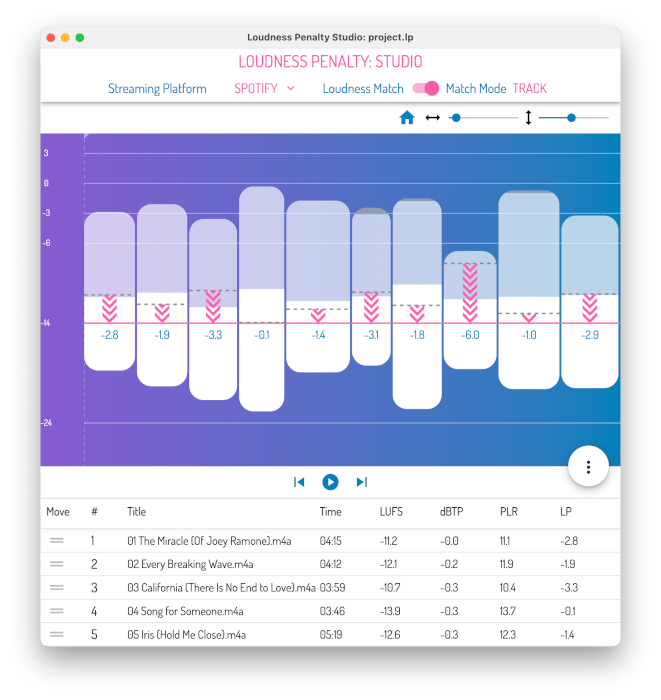
Scroll down to learn more about "Loudness Penalty"
Scroll down to learn what these numbers mean