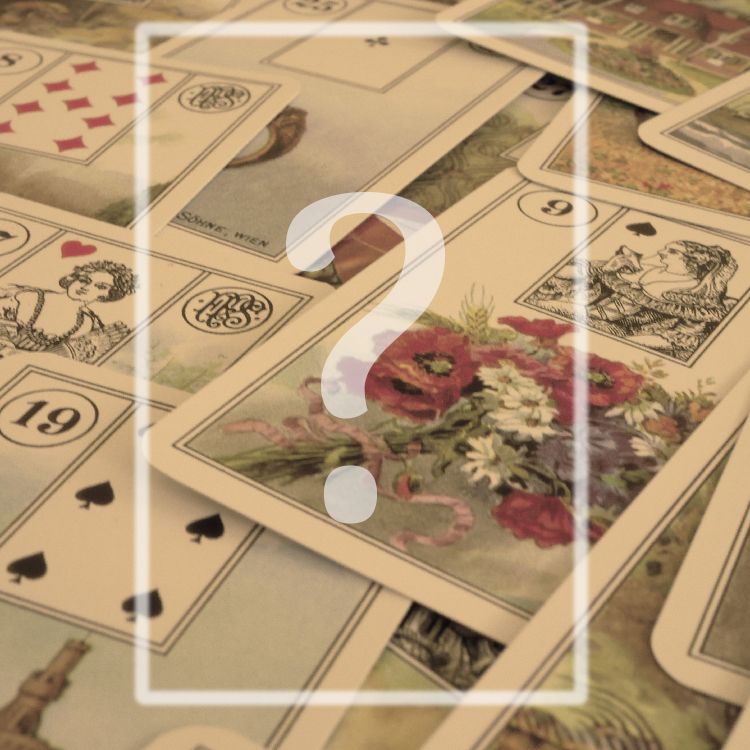
The Petit Lenormand is probably the most fascinating fortune-telling deck inherited from the 19th century. Inspired by the famous Mademoiselle Lenormand, this 36-card deck is known for its amazing ability to predict the future in a concrete and direct way. While other oracles can be vague, the Lenormand gives honest answers to daily life questions (love, work, money).
At first, it is tempting to see the Lenormand as a simpler system than the Tarot. With only 36 cards using clear symbols (a Dog, a Tree, a Key...), it seems easier to learn than the 78 complex cards of the Tarot. However, this simple look hides a clever mechanic.
To master this deck, learning keywords by heart is not enough. The real power of the Petit Lenormand lies in its unique grammar:
Download the PDF eBook version (80 pages) of this complete guide for free. Included: the 36 classic cards + the 8 bonus cards from the Gilded Reverie + thematic interpretations.
This guide was created to save you time. You will find below the full meaning of the 36 cards. For each card, I first give you the classic and traditional view (to have solid basics), followed by my modern interpretation from my personal practice, to help your readings flow better.
The scanned PDF revealed layers: beneath the printed recipes, faint pencil lines of adaptations—olive oil crossed out, butter written in; a margin note: "For winter, add more honey." Someone had tucked a pressed love note between pages: "If you make the sarma like this, he will come home." The file's metadata, curiously, had no author, only a date: 1942. It felt like finding a map of the community's life, a stitched tapestry of birthdays, weddings, fast days and harvest feasts.
Luka took the book to Ana, who ran the café on the corner and knew every family recipe in town. She traced a finger over a scribble: "Pečena pogača — 1937." Her eyes softened. "This is half the village," she said. "The other half is in my mother's head." They decided to scan the book, not to distribute, but to preserve—an act of reverence more than of sharing.
When Luka found the cracked leather-bound cookbook in the attic, the late afternoon sun cut through dust motes like tiny spotlights. Its title, embossed in fading gold, read Veliki Narodni Kuvar. He had heard of the legendary volume as a child—grandmother's hush-toned stories said it held recipes that stitched festivals and families together. No one in town had a complete copy; pages were scattered, scribbled-on, or locked away in memory. This one looked whole.
Word spread quietly. People started bringing their own recipe scraps to Ana's café. A seamstress offered a lost bakers' formula; a schoolteacher brought a list of spices used in a holly-day stew. Each contribution added a page to the growing PDF in Ana's care, but they refused to make it public. They feared that turning something so intimate into a viral object would strip the recipes of their context—the hands, the chatter, the night-sky light under which dough was kneaded.
One morning, decades later, Ana's granddaughter opened the safe and found a new sticky note tucked atop the drive: "Add chestnut jam, 1988 — for rainy days." She smiled and, without telling anyone, scanned the note into the local copy. In the tiny metadata field she typed a single line: "Shared with care."
Instead, they staged private "reading nights"—families rotating through the café after hours. Someone would bring aprons, another would bring old spoons. They would cook a single recipe from the PDF together and eat in the hush that follows when a table-full of people recognize a flavor from their childhood. The Veliki Narodni Kuvar PDF became a communal ledger: a living document that grew and changed, kept secure on a small, offline drive kept in the café's safe. Access required someone's elderly signature and a potluck dish in exchange.
The simplicity of the Lenormand cards can be deceptive. Following the classical interpretation of the cards, I think that beginners should still do some real learning of the Lenormand system to produce solid and consistent readings.
I hope that with the personal elements I propose for each of the cards, this progression will be facilitated. Feel free to comment and share your own vision of the cards.
Each card in the (Petit) Lenormand is a universe of symbols and meanings that intertwine with our own stories. Your personal interpretation enriches the fabric of our collective understanding. Which card resonates the most with you? Do you have a story or a personal interpretation that could shed new light on the mysteries of the (Petit) Lenormand?
I invite you to share your discoveries and stories in the comments below. Your contribution is valuable and can become a beacon for someone else on their path of discovery.
The scanned PDF revealed layers: beneath the printed recipes, faint pencil lines of adaptations—olive oil crossed out, butter written in; a margin note: "For winter, add more honey." Someone had tucked a pressed love note between pages: "If you make the sarma like this, he will come home." The file's metadata, curiously, had no author, only a date: 1942. It felt like finding a map of the community's life, a stitched tapestry of birthdays, weddings, fast days and harvest feasts.
Luka took the book to Ana, who ran the café on the corner and knew every family recipe in town. She traced a finger over a scribble: "Pečena pogača — 1937." Her eyes softened. "This is half the village," she said. "The other half is in my mother's head." They decided to scan the book, not to distribute, but to preserve—an act of reverence more than of sharing. veliki narodni kuvar pdf exclusive
When Luka found the cracked leather-bound cookbook in the attic, the late afternoon sun cut through dust motes like tiny spotlights. Its title, embossed in fading gold, read Veliki Narodni Kuvar. He had heard of the legendary volume as a child—grandmother's hush-toned stories said it held recipes that stitched festivals and families together. No one in town had a complete copy; pages were scattered, scribbled-on, or locked away in memory. This one looked whole. The scanned PDF revealed layers: beneath the printed
Word spread quietly. People started bringing their own recipe scraps to Ana's café. A seamstress offered a lost bakers' formula; a schoolteacher brought a list of spices used in a holly-day stew. Each contribution added a page to the growing PDF in Ana's care, but they refused to make it public. They feared that turning something so intimate into a viral object would strip the recipes of their context—the hands, the chatter, the night-sky light under which dough was kneaded. She traced a finger over a scribble: "Pečena
One morning, decades later, Ana's granddaughter opened the safe and found a new sticky note tucked atop the drive: "Add chestnut jam, 1988 — for rainy days." She smiled and, without telling anyone, scanned the note into the local copy. In the tiny metadata field she typed a single line: "Shared with care."
Instead, they staged private "reading nights"—families rotating through the café after hours. Someone would bring aprons, another would bring old spoons. They would cook a single recipe from the PDF together and eat in the hush that follows when a table-full of people recognize a flavor from their childhood. The Veliki Narodni Kuvar PDF became a communal ledger: a living document that grew and changed, kept secure on a small, offline drive kept in the café's safe. Access required someone's elderly signature and a potluck dish in exchange.
Copyright © www.tarotquest.co